
Cagliari
The perfect capital city (complete with flamingos) for gentle, mysterious Sardinia.

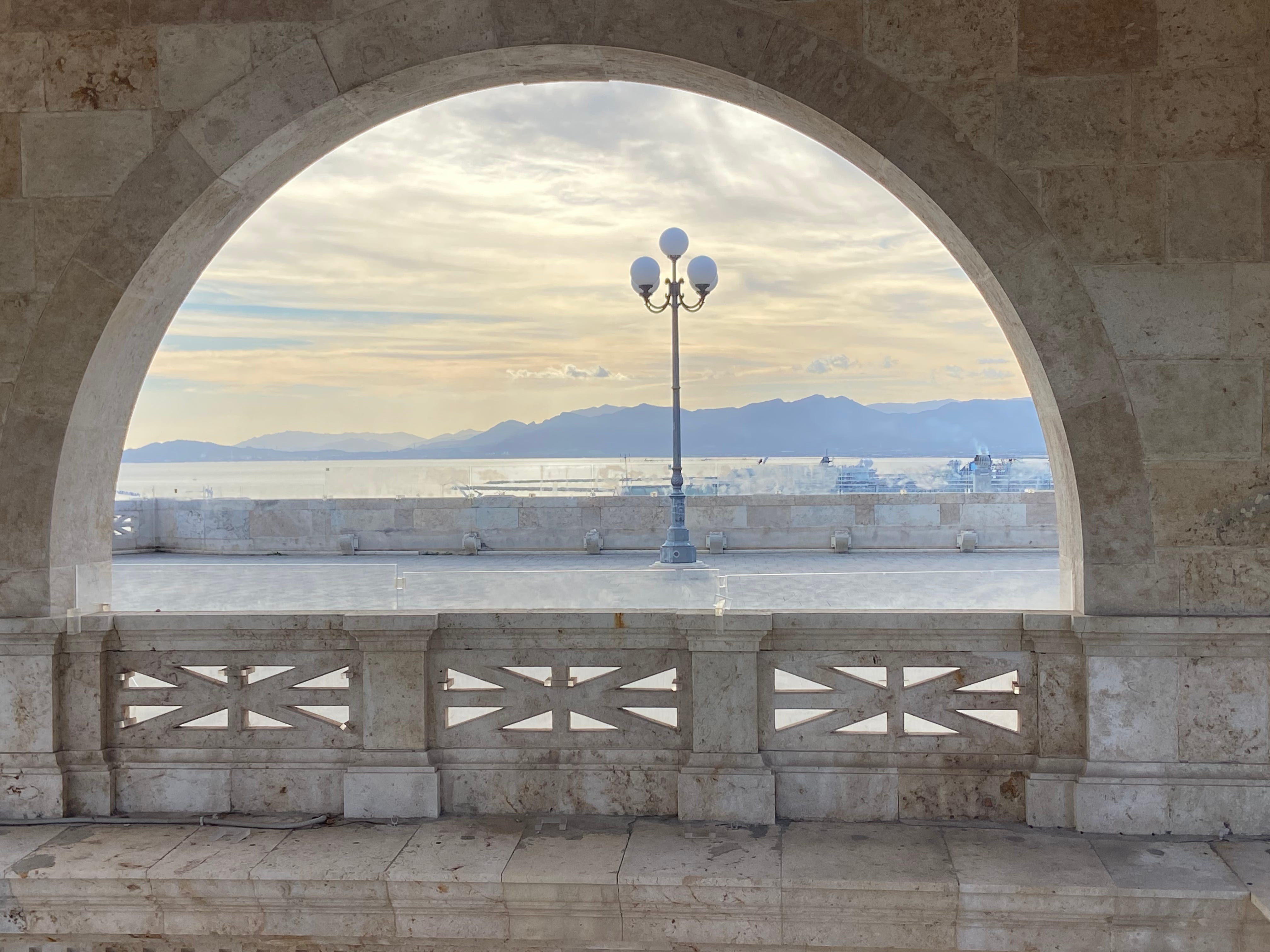
Sunset from the majestic Bastion Saint Remy, a symbol of the city.
In Sardinia, the greens are laced with silver, the blues lead to indigo, and a gentleness wafts its way from the sea to the mountains.
It took two trains, two planes and two automobiles to get back to Europe.* My first stop was Ferney-Voltaire on the French-Swiss border, notable for its famous patron (Voltaire), a superlative farmers market, and most importantly, one of my closest friends, Lilia Smelkova. A trip to Lilia’s means home cooked meals and amusing opportunities to speak French (amusing to me, probably not the locals). My exquisitely capable friend of two decades can be relied on to provide excellent company, rest, outings, pastries and whatever I forgot to pack this time. Somehow she succeeds at this despite having two children under the age of ten, four different diets to cater to, and a job at the United Nations. It’s one of the world’s great mysteries, but anyhow, stopping in Ferney-Voltaire is like staying with family.
Which meant that when I flew to Cagliari a few days after getting to Europe, stepping foot in the capital city of the Italian island of Sardinia felt like the real start of my adventure. Deplaning at dusk, low mountains stacked against each in soft shades of indigo, gentle island breeze, handsome Italian plane technicians in bright orange uniforms - the whole thing nearly brought me to tears.
It has been twenty years since my last visit to Sardinia. Back then, I was working for Slow Food in Bra, about to move back to the USA to take a job as Alice Waters’ assistant. I sat on a boulder overlooking the sea, reading Ruth Reichl’s Tender at the Bone and wondering if leaving Italy was the right choice. I flipped a page and landed on the chapter where Ruth takes her mother to dinner at Chez Panisse and meets Alice for the first time. I recognizing Ruth’s vivid description of my soon-to-be boss, the huge conviction packed into a diminutive frame. I was certain it was a sign that I was on the right track.
Now, at another big moment of change, it’s good to be back in Sardinia.
On that long ago trip I remember watching the murmurations of thousands of swallows at dusk; a waiter who made overalls seem hip; and the people both using the word and being themselves pocchetino - a sort of slag for “a little small” . (The Sardinian gene pool dictate much shorter folks than elsewhere in Italy.)


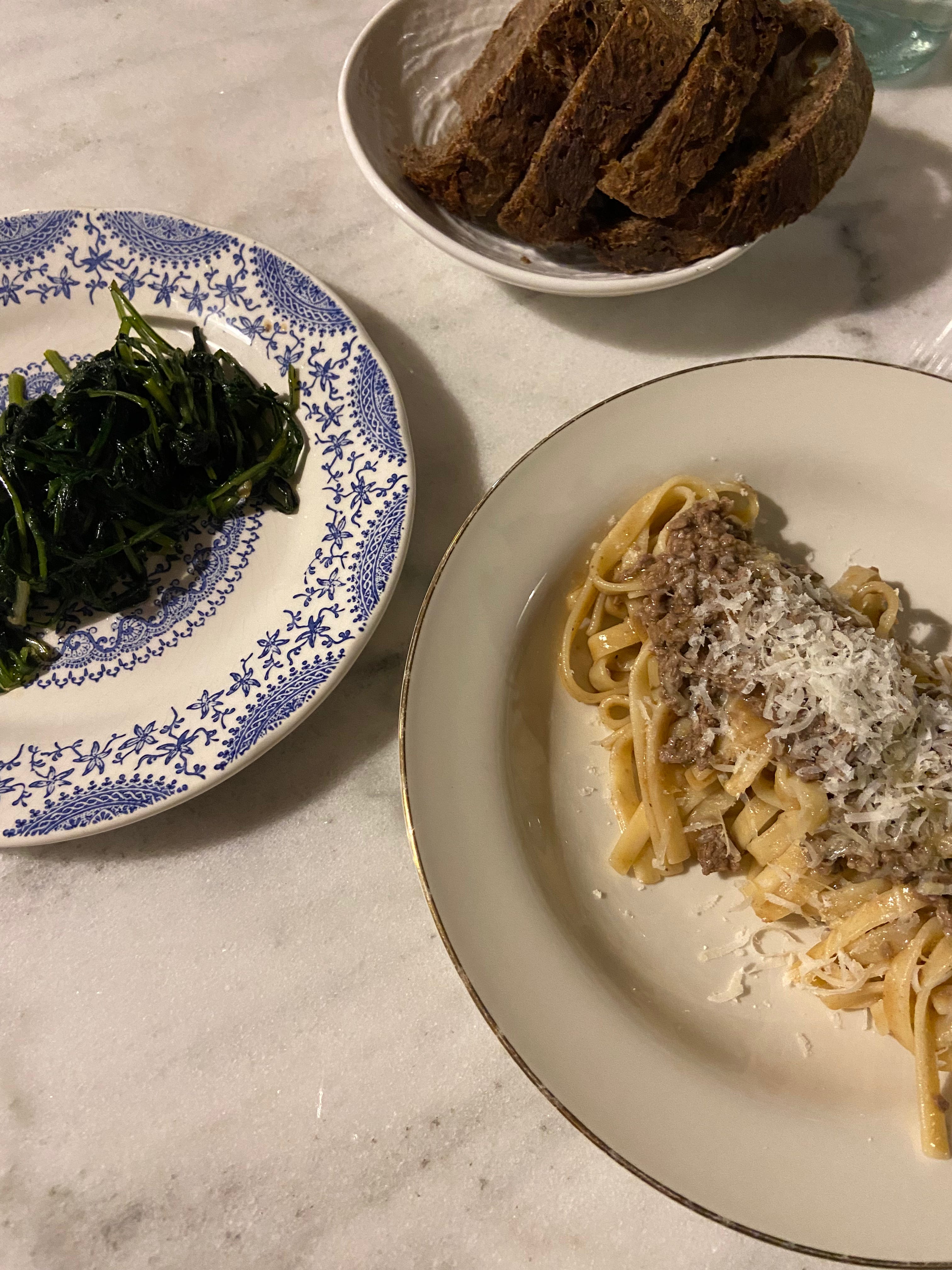
This time, I wanted to get get to know the capital city before heading to the magnetic and seemingly everlasting coast and mysterious inland kingdom of shepards and prehistoric ruins. Over four days in Cagliari, I visited everything from the plant filled streets of hip Villanova neighborhood to the Nuragic artifact-filled National Archeological Museum to the salt marshes. I ate the star shaped, ricotta and saffron filled padulas, shatteringly crispy, chantilly cream sandwich meringues, and perfectly simple sheep ragu. I loved everything about this strange city.
It’s a port town; but lacks the sense of danger, that grit you feel in Genoa or Naples. People are patient, soft spoken, well dressed and smell very good. The city is filled with perfume shops – but also confusingly tattoo parlors, despite no noticeable tattoos on the residents. It feels like a real city (not a tourist town), with everything you might need for urban living easily accessible*: eyeglass stores, supermarkets, cell phone repair shops.
*Except parking. Cagliari put my San Francisco-honed parallel parking skills to the test.
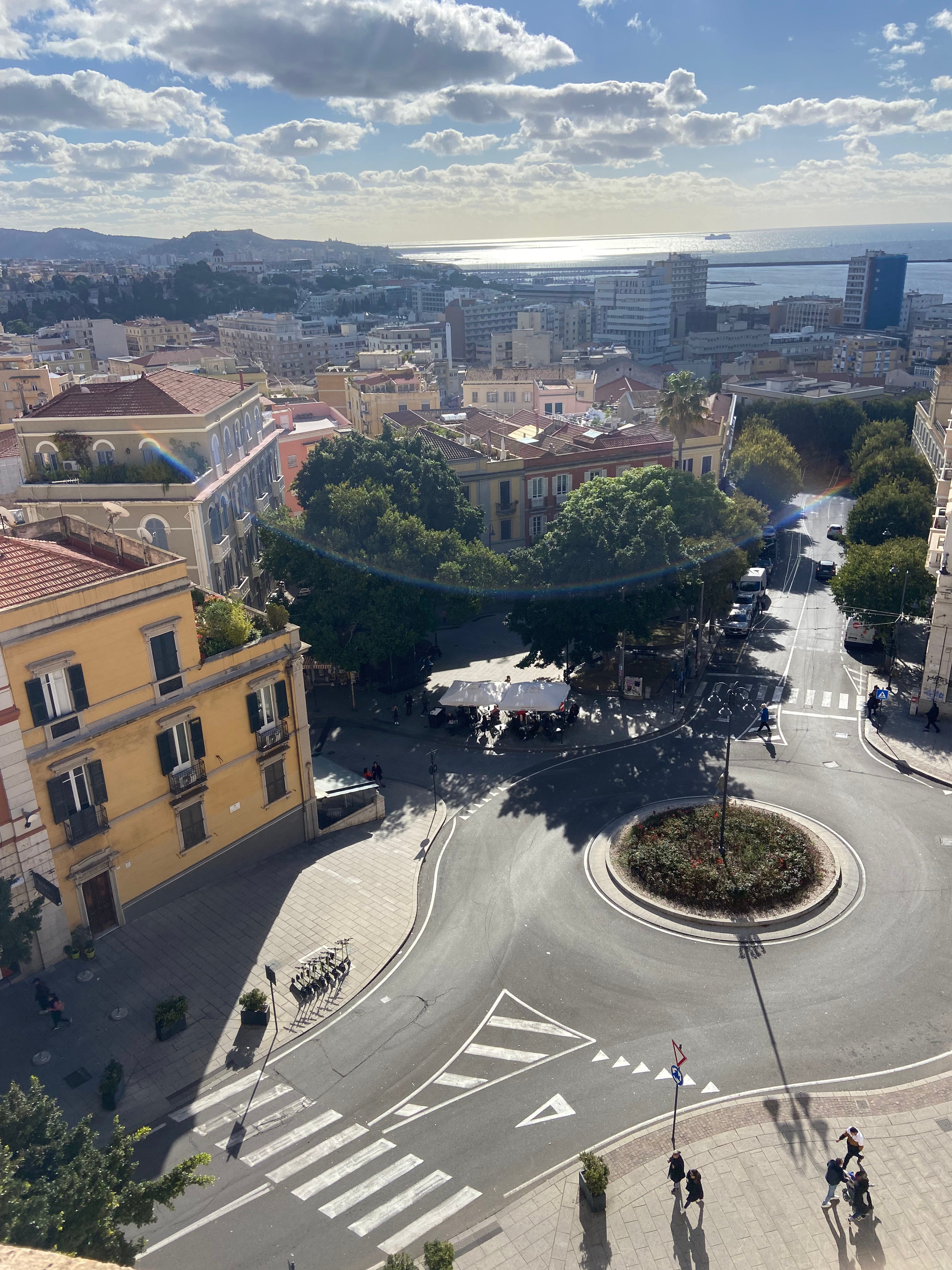
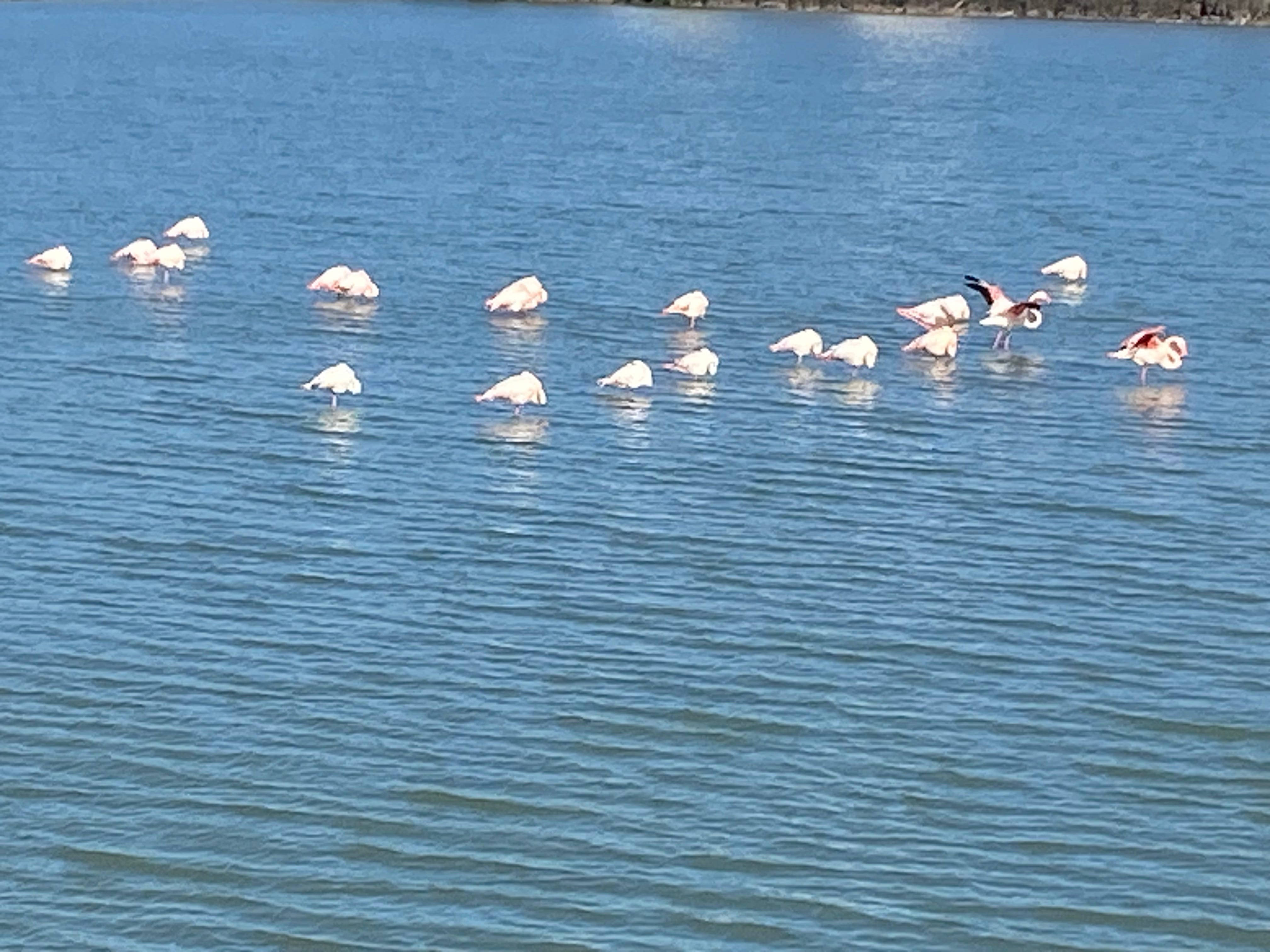
Despite being a “real city” with about half a million people, at times it felt unexpectedly provincial, like when the doctor I visited spoke no English. At other times, it was not only cosmopolitan but surprisingly international. Like when I observed a gaggle of kids in uniform playing in a piazza, sporting Australian, British, Canadian and American accents, and realized there must be an international school. Or when I discovered there is a Belarussian Consulate here. Something I could square finding in Rome, but was baffling by in this island region. Adding to its mystick, there are vast salt marshes within the city limits, with – get this – flocks of flamingos. They are African flamingos, passing through on their way further north, though the very young and old tend to stay all year long. Unlike their South American cousins, the pink is limited to a strip on their wings, beaks and feet, with beautiful black feathers on their wing tips.
All of this struck me being in Cagliari. But more than anything else, what stood out the first few days here is that the Sardi are really, really nice.
I emailed a friend at Slow Food to see if he had any recommendations for what to do while here in Sardinia. He didn’t have much insight, but introduced me to a Sardinian colleague. Within an hour, she email to suggest that her father might be a good tour guide to visit the Nuragic ruins in the center of the island; her Pecorino Sardo producing cousin could show me the cheese making process; and the owner of Babeuf, the coziest little restaurant in Cagliari, would be expecting me for dinner.
Then, as if to ensure I didn’t think that was anomaly, the host for an upcoming Airbnb stay at the beach reached out, said he lives in Cagliari and offered his services to help with anything I might need before my official stay at his place began. Working hard to resolve some pesky plantar fascitis, I asked him for a physical therapist recommendation. Rather than provide a name, he booked me an appointment the next morning at a clinic, despite it being *technically* full, and send over careful instructions on who to ask for that could get me in. The friend of my future Airbnb host not only got me in to the doctor with barely 5 minutes of wait time, he then refusing to let me pay (despite that fact that doctors are not actually free for foreigners in Italy).
Italians have a generous spirit and warm sense of hospitality, but what I’ve experience here has been above and beyond. I’m not sure what explains the kind, gentle, generous national character of Sardinia, but I have an uneducated guess. It is that people have lived very well here for a long time. And I mean a LONG time. The earliest full human skeleton found on the island dates to the Upper Paleolithic (12,000-50,000 years ago!) and archeological evidence suggest Sardinia was one of the first places in all of Europe to be inhabited by humans.
The land is fertile. The oceans are filled with seafood. The ground harbors valuable metals and ore (there are ancient mines dating back to the 6th century BC here, now UNESCO world heritage sites). It’s one of the “Blue Zones” with the highest concentration of centenarians. Starting thousands of years ago, Sardinian craftsmen were producing intricate jewelry and figurines. People live long and healthy lives, close to nature. It has been conquered many times over, but the conquers seem to be remembered (at least, as portrayed in the museums) principally for bringing new technology, traditions and crafts rather than for killing, strife and oppression.
I’m looking forward to better understanding the Sardinian good life and their gentle, kind national character in the next few weeks.
I recently arrived at that seaside Airbnb I mentioned. Their everyday supermarket has porceddu, traditional roast suckling pig; boat shaped culurgiones, a stuffed pasta filled with mashed potatoes, mint and garlic; and and array of almond, raisin and honey based Sardinian sweets. The beach I stumble onto when I walk out my door is almost too pretty to believe. I think this will be an excellent place for contemplation.


*After my post about Bologna, I popped back to the USA - Portland, Los Angeles and Washington D.C. - for both the mundane (prepare my house for a renter) and the exciting (seeing Alice, surrounded by friends and family, be honored with a lifetime achievement award from the Julia Child Foundation; a tremendously inspiring lunch with Al Gore, US Surgeon General Vivek Murthy and leaders in school supported agriculture from around the country; and last but not least to pick up my shiny new EU passport…good stories for another day!).